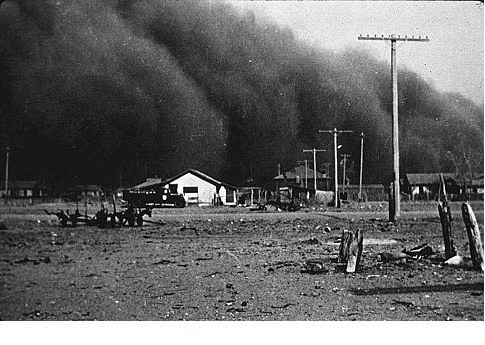
The 1930s marked the decade of one of the most frightening events in America. During this time, millions of Americans were helplessly suffering due to The Great Depression. Specifically, after WWI, farmers had been struggling to sell their products. There was an overproduction and underconsumption of farm products throughout this period. The crash of the economy led famers to go bankrupt. Along with that, The Dust Bowl, a period of severe dust storms, exacerbated the farmers' situation. These events ultimately led some farmers to say goodbye to their farms. However, many farmers stayed strong and decided to strike against the government. The Farm Strike, where farmers attempted to block farm products from going to the towns and cities, was ineffective. Eventually, the government took action by passing the Agricultural Adjustment Act, in which famers were paid to reduce production of farm products. The act helped many farmers to reduce their debt and continue to struggle through the harsh times. However, this act did not help the poorest of the farmers but instead encouraged farmers to leave their land. Thus, many families had no choice but to set off to California to seek for a better life.
(link)
The Grapes of Wrath by John Steinbeck, depicts the life of farmers during the period of the 1930s. Specifically, The Dust Bowl caused many farmers to give up their farms in search for a decent life. The severe dust storms ruined crops and created trouble for the farmers. In addition, the banks worsened the financial issues of farmers. In the novel, the Joad family are told to leave their farm in Oklahoma because of financial and agricultural issues. The landowners had to tell them to leave because farmers couldn't pay for the rent. Instead, landowners used tractors to replace the farmers, creating complications for farmers. With little help, the Joad family sets off to California in search for a better life.

No comments:
Post a Comment